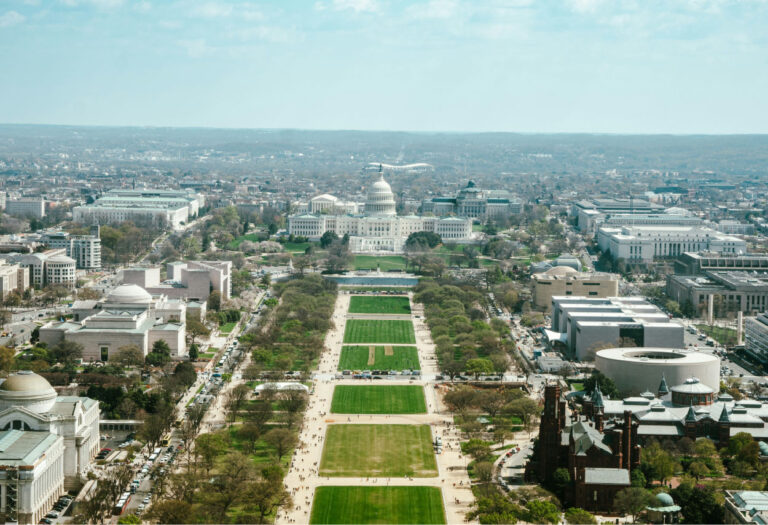
Visiting the National Mall is experiencing an essential part of U.S. history. This vast green corridor, stretching from the Capitol to the Potomac River, is not just a park, it’s a walk through memory, symbolism, and the character of a nation. Every step takes you to a meaningful site, and every monument speaks without words.
For those taking a tour to Washington from New York, this area is the highlight of the trip. Whether you go on your own or join a guided tour, walking through the National Mall is genuinely entertaining, learning history becomes much more enjoyable with so many unique, famous, and meaningful landmarks around you.
East to West: The National Mall is A Walk Through History
The journey usually begins at the eastern end, in front of the impressive United States Capitol, home of Congress. From there, a straight visual line connects a series of monuments and open spaces that form the symbolic heart of the city.
Between the Capitol and the Potomac River stands the Washington Monument, a nearly 170-meter-tall obelisk. This white marble structure, dedicated to George Washington, was once the tallest building in the world. If the weather and timing allow, taking the elevator to the top provides unmatched views of the city.
At its base lies the Reflecting Pool, a rectangular body of water over 600 meters long that peacefully mirrors both the obelisk and the Lincoln Memorial. This iconic image, featured in countless films and speeches, feels even more powerful when seen in person.
Monuments That Leave a Mark
At the western end of the Mall is the Lincoln Memorial, featuring a seated statue of President Abraham Lincoln, facing east. It is one of the most photographed and visited places in the country and has hosted historic moments, such as Martin Luther King Jr.’s famous “I Have a Dream” speech.
Korean War Veterans Memorial
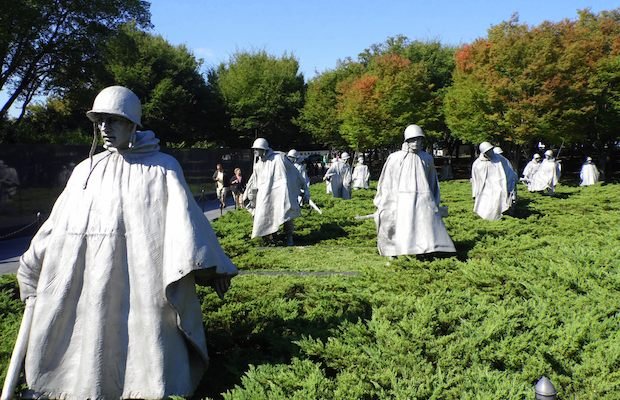
Inaugurated in 1995, this memorial features 19 stainless steel statues depicting soldiers from the Army, Navy, Marine Corps, and Air Force moving through rugged terrain.
The most fascinating detail is the hidden symbolism: the statues are reflected in a polished granite wall, creating the visual illusion of 38 soldiers. This number is not a coincidence; it refers to the 38th Parallel, the border line that divides North and South Korea. The site also includes the “Pool of Remembrance,” a quiet space that invites reflection on the sacrifice of those who served.
Surrounding it are several powerful memorials:
- The Vietnam Veterans Memorial, with its black granite walls engraved with the names of fallen soldiers.
- The World War II Memorial, featuring fountains, columns, and wreaths representing U.S. states and territories.
- The Korean War Veterans Memorial, where stainless steel figures appear to move forward through the mist.
- The newer Martin Luther King Jr. Memorial, with a stone-carved statue that radiates strength and resolve.
Each of these spaces has its own atmosphere. Some are quiet and solemn; others invite reflection and open conversation. Together, they form a journey that stays with you long after you’ve left.
Vietnam Veterans Memorial
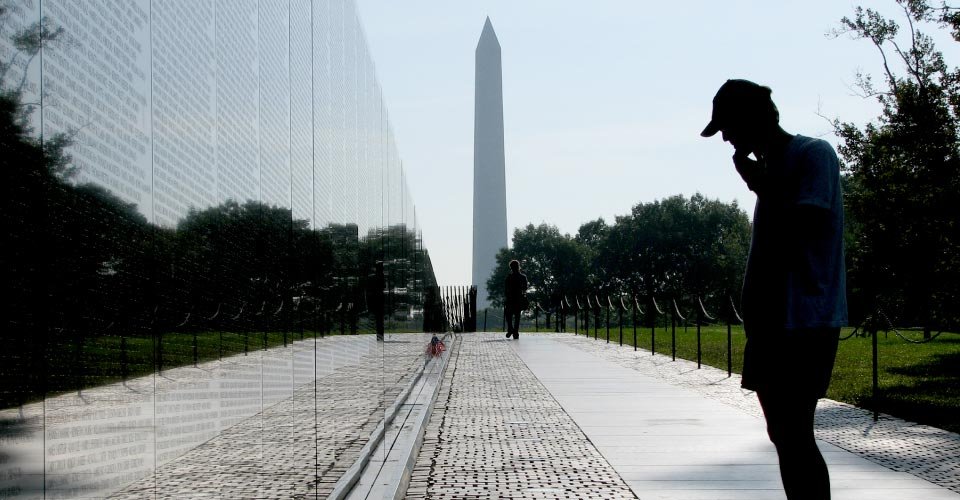
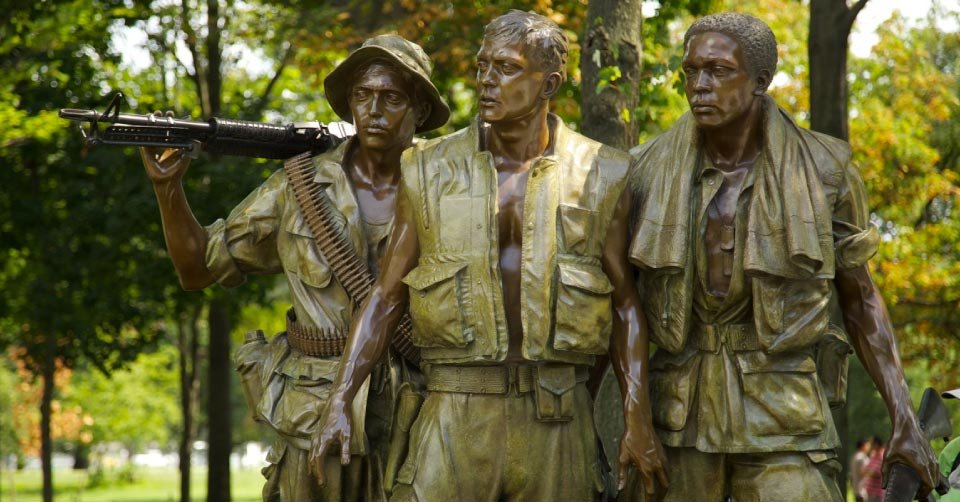
Located between the Washington Monument and the Lincoln Memorial, this site is one of the most emotional points in the park. Inaugurated in 1982, it honors those who served in the Vietnam War and is divided into three key parts:
- The Memorial Wall: A polished black granite wall engraved with over 58,000 names of fallen or missing soldiers. Its reflective surface mirrors the visitors, connecting the past with the present.
- The Three Soldiers: A bronze statue representing the diversity of the U.S. troops, depicting a white, an African American, and a Hispanic soldier.
- The Women’s Memorial: Dedicated to the women who served in the conflict, primarily as nurses, recognizing their heroic humanitarian work.
Lincoln Memorial: A Temple of Liberty
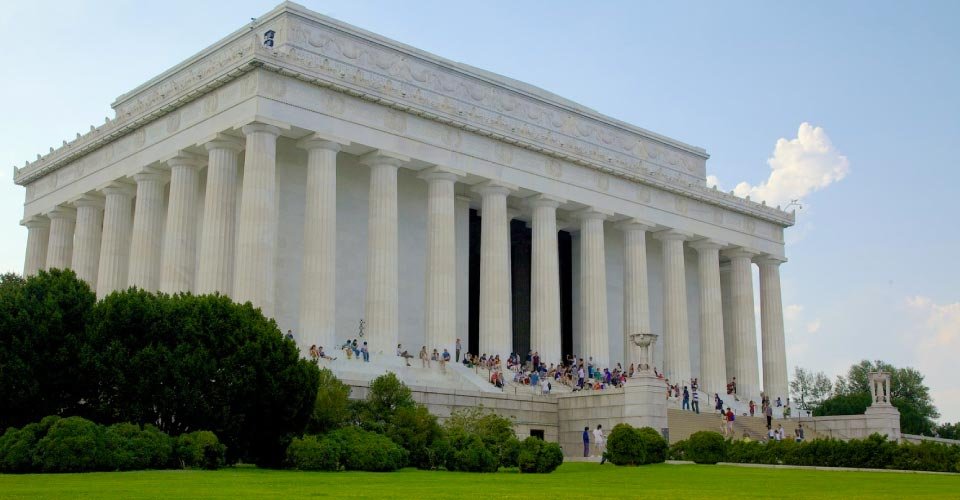
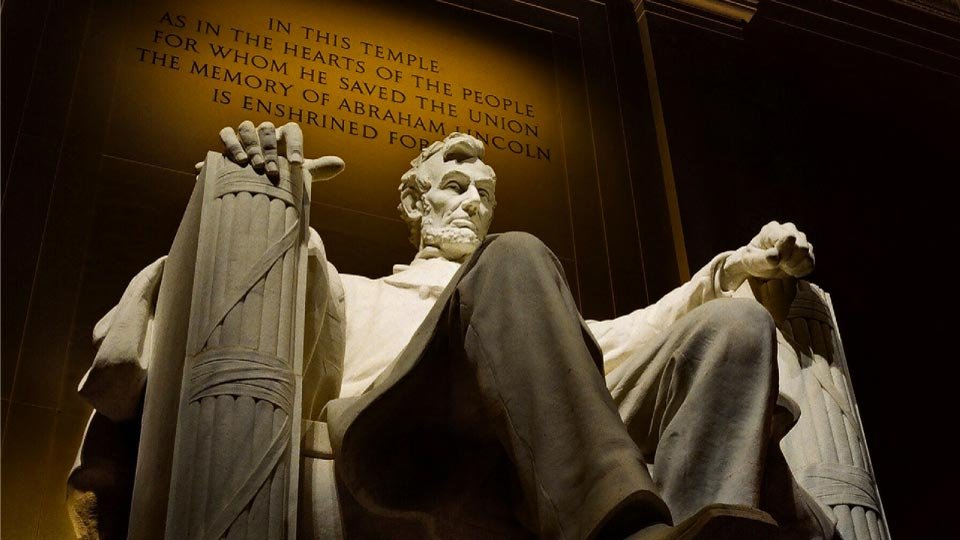
Located at the western end of the National Mall, the Lincoln Memorial is one of the most iconic structures in the world. Designed by architect Henry Bacon in a neoclassical style that evokes the Parthenon of Athens, it was built between 1914 and 1922 to honor the 16th President of the United States, Abraham Lincoln.
- The Columns: The building is surrounded by 36 Doric columns, representing the 36 states in the Union at the time of Lincoln’s death.
- The Sculpture: Inside, the imposing statue of a seated Lincoln, carved by Daniel Chester French, sits in a solemn, pensive pose.
This site is more than just architecture; it is the heart of the Civil Rights Movement. From its steps, overlooking the Reflecting Pool, Martin Luther King Jr. delivered his historic “I Have a Dream” speech in 1963. Standing where he stood is a mandatory stop on any Washington tour from New York, allowing you to see the actual scale of the monument and the famous speeches carved into the walls.
Smithsonian Museums

Lining the sides of the Mall are some of the most important museums in the country, all part of the Smithsonian Institution, and all with free admission. You can visit the National Museum of Natural History, the National Air and Space Museum, the Museum of American History, the National Museum of African Art, among many others. Each one offers modern, well-curated exhibits for both adults and children.
If you’re on a guided tour in Washington, you’ll likely have free time to visit one or two museums. It’s impossible to see them all in a single day, but even a brief visit can be incredibly enriching.
Nearby Places to Expand the Experience

Just beyond the National Mall, there are other must-see spots. Cross the Potomac River to visit Arlington National Cemetery, where thousands of American soldiers are buried, including notable figures like John F. Kennedy. The Changing of the Guard at the Tomb of the Unknown Soldier is one of the most solemn and respected ceremonies in the country.
Other nearby highlights include the National Archives, where the Declaration of Independence is preserved; the White House, just a short walk from the Mall; and the Museum District, with private galleries, outdoor sculptures, and cafés that invite you to take a break.
Tour to Washington from New York
Most travelers who take a tour to Washington from New York start their day early. The drive takes several hours, but once in the capital, the itinerary is well-organized to cover the essential highlights. While there’s quite a bit of walking involved, the tour flows naturally and comfortably.
Spanish-speaking tours are increasingly common. These offer knowledgeable guides, accessible cultural and historical explanations, and a more personalized experience for those who prefer to explore in their native language.
A Public Space for Everyone
What makes the National Mall truly special is that it’s not a closed tourist attraction. It’s an open, free public space, no gates, no entry tickets. You can explore it alone, with a partner, in a group, or as part of a guided tour, and still feel like you’re part of something greater.
Walking through the Mall, stopping to read an inscription, watching people gather to pay tribute, or simply relaxing on the lawn, all of it is part of the experience. It’s not a place that forces you to look, but one that invites you to think.